Posts

National Runaway Switchboard: Interview with Maureen Blaha

Image
[Episode 67] Today's episode of the Social Work Podcast is an interview with Maureen Blaha, the Executive Director of the National Runaway Switchboard ( http://www.1800runaway.org ). So, if you're a social worker and you work in outpatient or inpatient or residential or you're in a school-based setting and you have a client who says I'm out of here. I am running away from home or maybe they don't even say I'm out of here. Maybe they're saying I don't know how I can live with my parents here. So, what do you do? What are some resources for you? If you're in a school setting and you're working with groups of kids, are there curricula that you can get a hold of, free curricula that you can use with your clients? Well, these are all setup questions because, of course, the answers are in today's episode of the Social Work Podcast. Maureen Blaha, the Executive Director, talks about the National Runaway Switchboard which was established in 19...

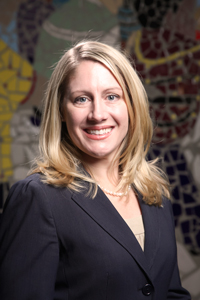
Coming Out, Coming Home: Interview with Michael C. LaSala, Ph.D.

Image
[Episode 66] Today's Social Work Podcast is about helping families adjust to a gay or lesbian child. According to the website, comingoutcominghome.com , "The discovery that a child is gay or lesbian can send shockwaves throughout a family. A mother will question how she's raised her son; a father will worry that his daughter will experience discrimination. From the child's perspective, gay and lesbian youth fear their families will reject them, and that they will lose financial and emotional support. All in all, learning a child is gay challenges long held views about sexuality and relationships, and the resulting uncertainty can produce, for all parties, anger, resentment, and concern for safety and acceptance." So, how can social workers help families adjust to a gay or lesbian child? To get some answers, I spoke with Dr. Michael LaSala author of the 2010 book, Coming Out, Coming Home: Helping Families Adjust to a Gay or Lesbian Child , published by Columbia Un...

The Process of Evidence-Based Practice: Interview with Danielle E. Parrish, Ph.D.

Image
[Episode 65] Today's episode of the Social Work Podcast is on the process of Evidence-Based Practice. I wanted to do an episode on Evidence-Based Practice because it has been the subject of a lot of debate in Social Work. One of the controversies is over how to define evidence based practice. In order to get some insight into the Process of Evidence-Based Practice, I spoke with one of social work's leading experts on the topic, Dr. Danielle Parrish, assistant professor with the University of Houston, Graduate College of Social Work. In today's interview, Danielle and I talked about the difference between the process of evidence-based practice and evidence-based practices, also known as empirically-supported treatments. We talked about why social workers should use the evidence-base practice process. Danielle identified some of the limitations of the EBP process, resources for social workers interested in accessing the evidence-base, and ways that social workers could suppor...

How do you define Evidence-Based Practice?

Image
[Update] Next week I'm posting an episode on Evidence-Based Practice. The interview is really nice and I think you'll really like it. With all episodes I do an intro where I introduce my guest, talk about why this topic is relevant to social workers, and then talk about what is covered in the interview. And so that's all well-and-good. Except that I've struggled with this intro because everyone seems to have a different understanding of what is Evidence-Based Practice. So, this is where you come in. Twice. First thing - at the top of this page you'll see that I've posted a poll. Take a minute � literally one minute � and select the definition of EBP you most agree with. I'm going to use the final tally in the introduction. The second thing is I want to hear from you. I want to know how you use evidence-based practice in your social work practice. There's a very easy way to do this: call and leave a message on the Social Work Podcast answering machine � 2...